
"defect count"
100 article(s) found
Coffee knowledge | grading of defective beans in SCAA boutique coffee
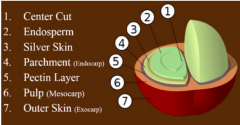
According to the SCAA (American Fine Coffee Association), raw beans are divided into category I and II defects. Before we understand the defective beans, let's take a look at the structure of the coffee fruit. The structure of coffee fruit after picking, the coffee fruit needs to go through a series of processes before it can become what we call coffee raw beans. This series of processes are often referred to as the handling of raw coffee beans or in the industry.

The standard of SCAA pecialty Coffee boutique coffee raw beans is necessary for a good cup of coffee.
The raw bean defects of SCAA can be divided into two types: I and II. The requirement for premium coffee grade (specialty coffee) is: 1. There are no class I defects; 2. No more than 5 II class defects 3. There can be no "quaker" (0 quaker) Quick beans in cooked coffee beans. 4. The color range of raw coffee beans is pale yellow (light yellow), yellow-green (

Special flavor Kenyan coffee Flavor Taste Manor Features Berman Manor
This is the earliest classification method and is still in use in many parts of Brazil. The method of identification is to take a random sample of 300 grams and put it on black paper, because black paper can best avoid reflection. Then, professional appraisers carefully inspect the samples to find defective beans and accumulate different scores according to the types of defects. For example, 1 black bean counts as 1 point, 1 small stone counts as 1 point, and 1 large stone counts as 1 point.

Description of Manor name and Flavor in boutique Coffee producing area in Kenya introduction to planting environment of taste varieties
This is the earliest classification of Kenyan coffee beans and is still in use in many parts of Brazil. The method of identification is to randomly take 300 grams of samples and put them on black paper, because black paper can best avoid reflection. Then, examined carefully by the professional appraiser, find out the defective beans in the sample, and accumulate different scores according to the types of defects. For example, one black bean counts as one point and one stone counts as one.
Standard of SCAA pecialty Coffee Fine Coffee Raw Bean
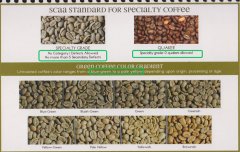
[SCAA "Specialty Coffee" standard for high-quality coffee raw beans] the raw bean defects of SCAA can be divided into two types: I and II. The requirement for premium coffee grade (specialty coffee) is: 1. There are no class I defects; 2. No more than 5 II class defects 3. There can be no "quaker" (0 quaker) Quick beans in cooked coffee beans. 4. The appearance of raw coffee beans
Boutique coffee beans: the standard of SCAA pecialty Coffee boutique coffee raw beans
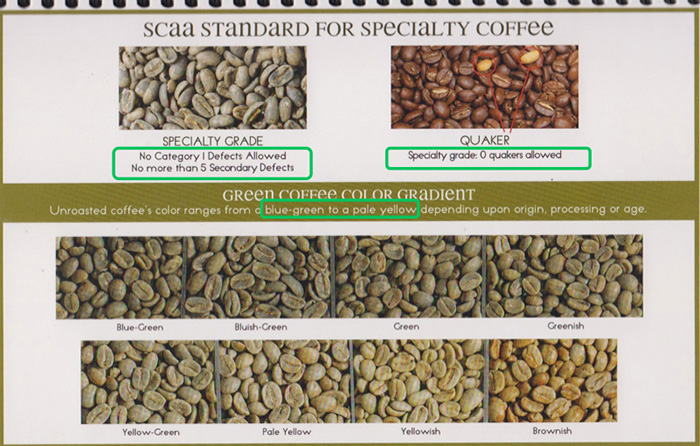
The raw bean defects of SCAA can be divided into two types: I and II. The requirement for premium coffee grade (specialty coffee) is: 1. There are no class I defects; 2. No more than 5 II class defects 3. There can be no "quaker" (0 quaker) Quick beans in cooked coffee beans. 4. The color range of raw coffee beans is pale yellow (light yellow), yellow-green (

SCA Arabica Coffee Raw Bean grading Manual _ how do Arabica coffee beans be graded?
Professional coffee knowledge exchange more coffee bean information please follow the coffee workshop (Wechat official account cafe_style) [the standard of SCAA Specialty Coffee fine coffee raw beans] the raw bean defects of SCAA can be divided into two categories: I and II. The requirement for boutique coffee grade (specialty coffee) is that there are no Class I defects and no more than 5 II classes are missing.
How many beans are there in 15 grams and 20 grams of coffee beans? How to count beans for a cup of coffee without weighing
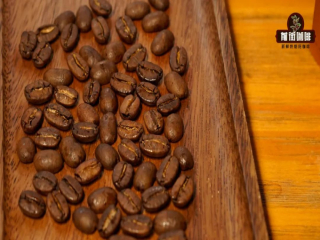
When brewing coffee by hand, if you don't weigh it around, how can you roughly determine the amount of 15g coffee beans? Today, Qianjie Coffee will share with you a more alternative way to count beans. I don't know if you have ever wondered how many coffee beans are the 15 grams of beans that are usually used for cooking. No.

Points for attention in the examination process of Q-Grader raw beans how to distinguish defective coffee beans
CQI Coffee quality Institute's Q-Grader Coffee tasting Test has always been the most stringent and valuable sensory test in the global coffee industry. In this examination, in addition to the higher requirements for the sensory ability of candidates, but also have a certain understanding of the basic knowledge of coffee. Explain,

Introduction of coffee defective bean varieties to understand the culprit that affects the quality of a cup of coffee
Coffee beans have many flaws, and there are a variety of flaws. There are many reasons for defects. Defects may affect our taste experience of coffee at different levels, and may also affect our health. However, many defects that can be clearly seen in raw beans can be quickly invisible once baked. Therefore, most of the coffee cooked beans we usually see are uniform in appearance and consistent in appearance.

Coffee bean grade classification introduction of Brazilian coffee raw bean defect classification system
Professional coffee knowledge exchange more coffee bean information please follow the coffee workshop (Wechat official account cafe_style) front street-Brazilian coffee grading system introduction to Brazilian raw bean classification first coffee beans with parchment are shelled and removed by parchment machine. Workers then use vibration screening to grade coffee according to the density of raw beans. You know, density is an important measure of coffee quality.

What are the unripe beans in the defective coffee beans? Why unripe beans are formed?
Professional coffee knowledge exchange more caffeine beans information please pay attention to the coffee workshop (Wechat official account cafe_style) physical features: raw beans show broken, broken and other mechanical damage wounds, sometimes the edges will show black classification and defect score 5 damaged beans are counted as an II defect. Effect in the cup: if there is mildew, there is obvious earthy smell, dirty taste, sour taste and

What are the broken beans in the defective beans of coffee? How is the broken bean formed?
Professional coffee knowledge exchange more caffeine beans information please pay attention to the coffee workshop (Wechat official account cafe_style) physical features: raw beans show broken, broken and other mechanical damage wounds, sometimes the edges will show black classification and defect score 5 broken beans count as an II defect. Effect in the cup: if there is mildew, there is obvious earthy smell, dirty taste, sour taste and hair.

Classification standard and food safety standard of coffee beans what documents do you need to apply for to open a coffee shop?
Coffee bean grading standards and food safety standards what documents are required to open a coffee shop this is the earliest grading method, and it is still in use in many parts of Brazil. The method of identification is to randomly take 300 grams of samples and put them on black paper, because black paper can best avoid reflection; then a professional appraiser will examine it carefully to find out the defective beans in the sample and press the defective ones.

Is pepper the defective taste of coffee? What is the smell of defects?
Is pepper resin a blemish taste of coffee? It doesn't count. In the flavor round division of SCAA (American Fine Coffee Association), pepper flavor belongs to spice flavor, and coffee produced in some areas is characterized by spice flavor. Of course, some friends usually do not like smells like pepper and cloves, and when drinking coffee containing this flavor, they may think that this
How to grade raw beans of Brazilian coffee? how to divide the grading system of Brazilian coffee?
Professional coffee knowledge exchange more coffee bean information please follow the coffee workshop (Wechat official account cafe_style) front street-Brazil coffee graded introduction coffee bean origin management methods are different, some are composed of large and small farmers, some are dominated by professional business owners, even in the same place of coffee, its quality and flavor are also different, in order to mark coffee products
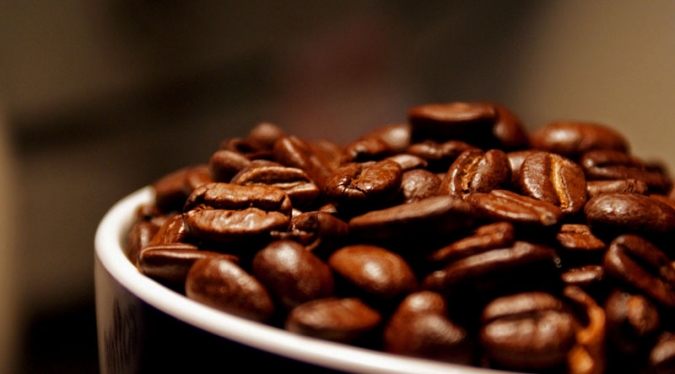
[literacy] have you made a clear distinction between the coffee bean grading criteria? (above)
There are different ways to manage the origin of coffee beans, some are composed of large and small farmers, some are dominated by professional business owners, even if the coffee in the same place, its quality and flavor are also different, in order to mark the quality of coffee, but also in order to make the transaction more convenient, so there is coffee grading. Coffee beans are processed differently in different countries, so they are produced.

Introduction to the characteristics of varieties produced by description and treatment of Grade Flavor of washed Coffee beans
The process of screening the grade of washed coffee beans is to put the coffee beans on the Internet and shake them back and forth by machine or manually, the beans the size of a mesh will fall and be removed, and the beans that have been removed will be screened through a smaller sieve.

Some summaries about Q-GRADER examination
First, about the examination subject Q-GRADER is a test jointly certified by SCAA and CQI. At present, the examination will take 5 days, with a total of 22 subjects. If you pass all the subjects, you can get Q-GRADER certification. If you have failed subjects, you can pass the make-up exam within 18 months. Specific subjects include: ①, 1 general knowledge written test, 100 answers in 1 hour
Some summaries about the Q-GRADER exam the barista exam
First, about the examination subject Q-GRADER is a test jointly certified by SCAA and CQI. At present, the examination will take 5 days, with a total of 22 subjects. If you pass all the subjects, you can get Q-GRADER certification. If you have failed subjects, you can pass the make-up exam within 18 months. Specific subjects include: ①, 1 general knowledge written test, 100 answers in 1 hour